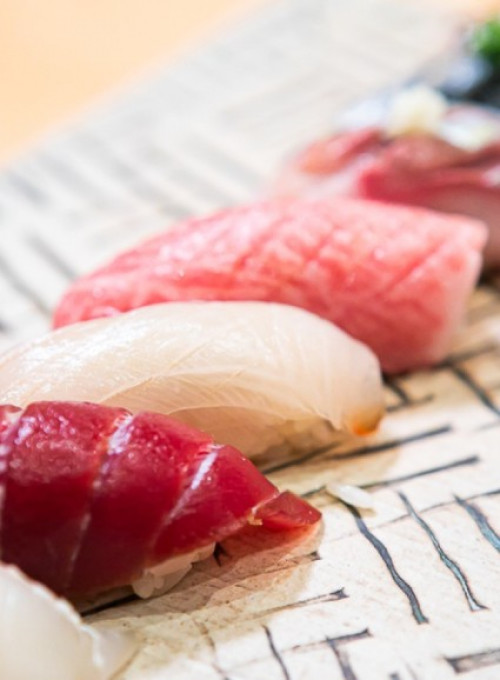
Today, sushi is popular not only in Japan but around the world. Korea is not the only country experiencing the omakase craze. New high-end sushi restaurants are opening in famous cities around the world, including New York. What's interesting is that most high-end omakase sushi restaurants outside of Japan have Japanese chefs in charge of itamae. On the other hand, in Korea, except for a very small number of Japanese chefs, Korean chefs occupy positions. The reason I tell this story is that if you look at the current sushi scene around the world, especially from a Japanese perspective, only Korea has a Galapagos-like topography. Of course, if you go back to the roots of the current Korean sushi industry, it was eventually formed by several Japanese chefs who came to Korea and Korean chefs who trained in Japan, and it has reached the present, so it is unique to Korea based only on the chef's nationality. It cannot be said that a tributary was created.
Therefore, current Korean omakase sushi is basically along the same lines as Japanese sushi. What's interesting is that if you go to the homepages of all sushi restaurants around the world, including New York, Hawaii, Singapore, Hong Kong, Paris, and London, they are all consistently implementing Edomae sushi or inheriting the spirit of Edomae. On the other hand, in Korea, there is no sushi restaurant or chef who claims that Edomae sushi is the basis, or that they have delved into or inherited the technique.
Let's first clarify that just because it doesn't exist doesn't mean it's a bad phenomenon, and then proceed with the discussion. Unlike other overseas countries, Korea has an indelible past history with Japan. Therefore, even if it is limited to food, it is a sensitive issue to talk about passing on the spirit of things related to Japan. Is that why there is no mention of Edomae sushi anywhere? Or is it because I simply understand Edomae sushi as a sushi technique that existed in the past? So why are today's Japanese chefs using Edomae sushi as the banner of their restaurants?
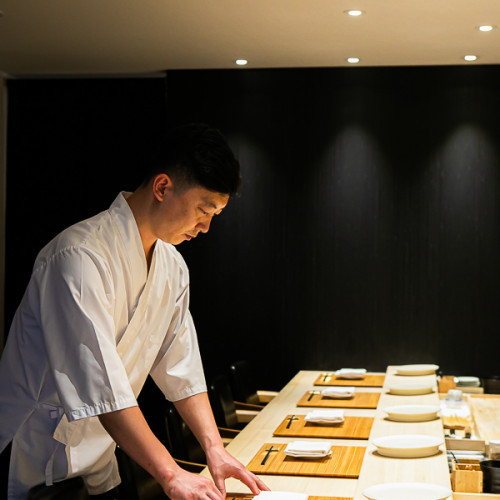
PS1 I need to know the definition of Edomae sushi first. Edomae sushi refers to sushi that developed during the Edo period (1603-1867), which lasted for over 250 years when Japan's Tokugawa Ieyasu established a shogunate in Edo (current Tokyo). Sushi existed in the Kansai region of Japan even before the Edo period, but the nigiri (holding sushi by hand) method as it is used today was established during the Edo period. Edo-mae (江戸前) refers to the front, river and sea seen from the highest point of Edo Castle in present-day Chiyoda-ku, Tokyo.
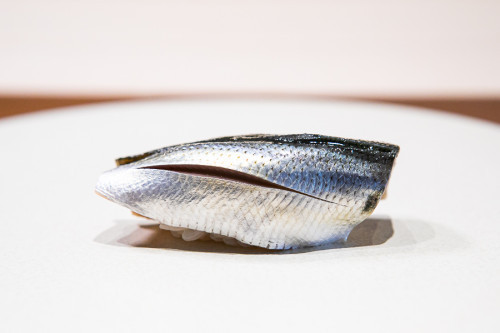
PS2 To put it simply, Edomae sushi refers to nigiri sushi made using fish and shellfish caught in present-day Tokyo Bay and the Sumida River, a river. It is no exaggeration to say that the most representative kohada, anago, maguro, and kurumaebi used in omakase sushi restaurants today were established at this time. However, I don't think this alone is enough to talk about Edoma.
PS3 The biggest essence of Edomae sushi can be said to be the safe preservation and processing of the fish used in neta. At a time when there were no refrigerators, sushi chefs went through a lot of trial and error to catch fish, safely distribute and preserve them, and make sushi. The sujime treatment method for kohada (shad), which now has numerous videos on YouTube alone, was a groundbreaking discovery during the Edo-mae period. In addition, the sushi chefs of the time went through countless troubles and trials and errors to develop safe and delicious sushi, and the results have continued to this day.
PS4 Today's Japanese sushi chefs, who no longer have difficulty keeping fish safe, are trying to create a new, modern Edomae sushi by inheriting the spirit of the efforts made by sushi chefs of the Edo-mae era. Sushi Sho's Keiji Nakazawa, who created dozens of high-end sushi restaurant groups in Japan and then suddenly moved to Hawaii, said he wanted to make sushi neta safe and delicious using fish caught in Hawaii and to embody Edomae sushi in regions other than Japan. do.
PS5 In this way, it is safe to interpret Edomae sushi not as following the past method that has been passed down for hundreds of years, but as inheriting the spirit of finding fish and seafood to create new sushi neta, and processing and cooking them in a new way. In Japan, many young chefs are currently taking on the challenge of becoming a new craftsman based on this interpretation. Sugita-san's Kohada was created after numerous trials and errors. Therefore, it can be said that the true spirit of Edomae sushi is the desire to work hard and not settle.